

8 June 2026
On 5 June 2026, more than one hundred policymakers, practitioners, sponsors and refugees gathered at Beursschouwburg in central Brussels for the second European Refugee Sponsorship Convention – a milestone moment marking the final actions of our QSN+ project and the ten years of community sponsorship in Europe and looking ahead to the decade to come. Co‑convened by the Share Network and the EU Agency for Asylum (EUAA), the Convention showcased how citizen‑led sponsorship and complementary pathways have moved from pilots to a recognised European tool for refugee protection and integration.
A movement built over a decade
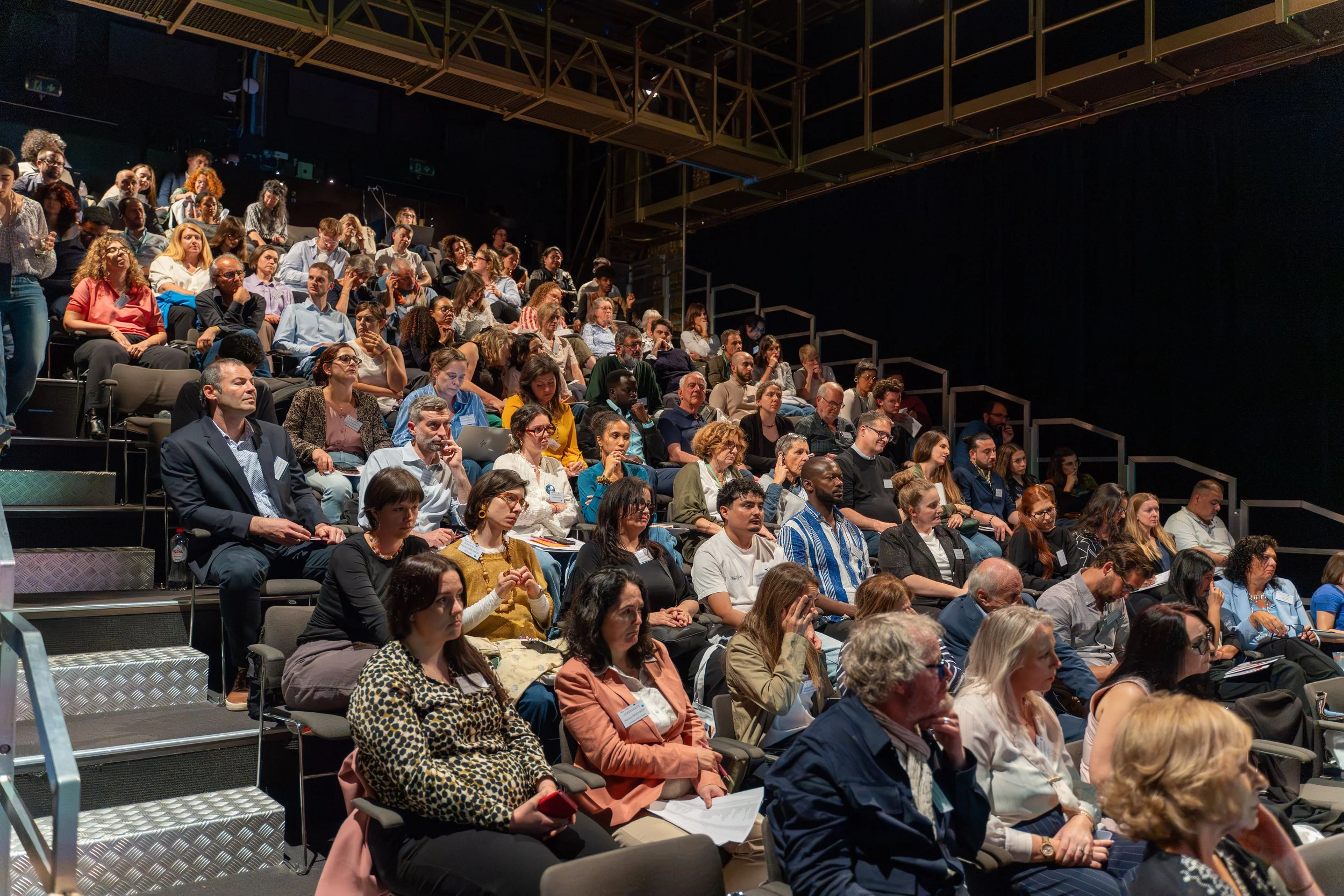
More than 130 participants from across Europe joined the Convention
The Convention opened by situating community sponsorship in the broader trajectory of European protection. Over the past ten years, resettlement‑based sponsorship programmes, humanitarian corridors and sponsorship‑like schemes have taken root across Belgium, Spain, France, Ireland, Italy, Portugal, Germany, the United Kingdom, Poland, the Netherlands and Sweden. Together, these initiatives have enabled more than 12,000 refugees to reach safety through safe and legal pathways backed by organised community support.
Speakers underlined that sponsorship offers a “double dividend”: it expands protection capacity by adding pathways on top of traditional resettlement, and it grounds reception in local communities, where volunteers accompany newcomers through housing, schooling, employment and social networks. Civil society organisations provide training, coordination and protection safeguards, while public authorities ensure orderly, rights‑based admission – a partnership model that mirrors the direction of recent EU policy on safe and legal pathways and community sponsorship.
High‑level support for a European approach
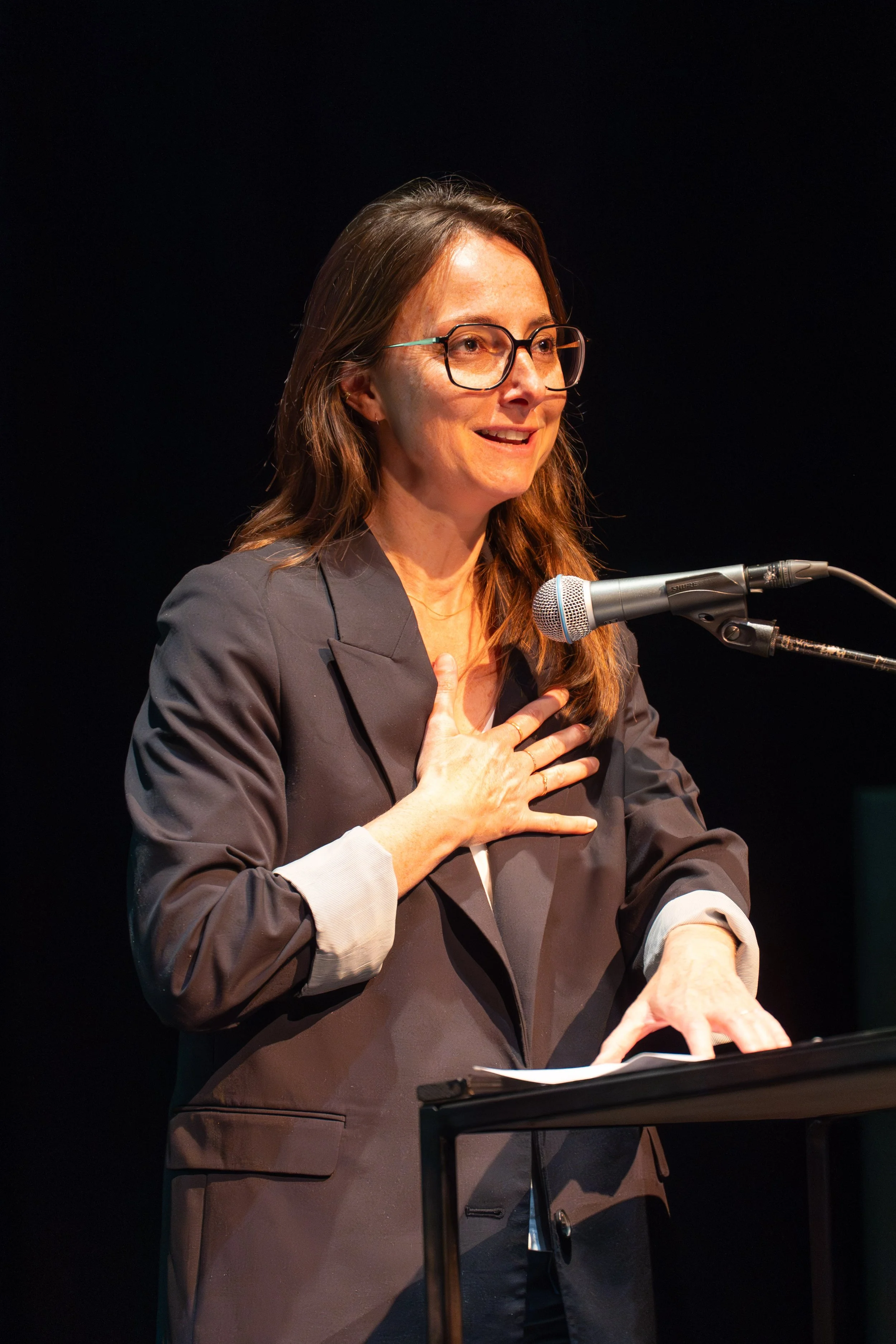
MEP Saskia Bricmont at the QSN+ European Sponsorship Convention 2026
The institutional welcome – delivered by ICMC Europe director, Stephane Jaquemet, MEP Saskia Bricmont and EUAA’s Head of Sector, Andre Baas– highlighted how community sponsorship has moved into the heart of EU debates on legal pathways and responsibility‑sharing. The European Parliament Think Tank has already recognised sponsorship as a promising tool within the Pact on Migration and Asylum, and the EUAA’s 2024 Guidelines on the EU approach to community sponsorship set out common quality standards for governance, sponsor support, matching and safeguarding.
Throughout the opening plenary, speakers from the European Commission’s DG HOME, the EUAA, foundations and long‑standing sponsorship practitioners reflected on the lessons of the past decade. They pointed to four shifts that now make a more ambitious European approach possible:
Sponsorship has proven its added value for protection and integration across different national contexts.
Strong intermediary organisations, often faith‑based or community‑based, now exist in multiple Member States.
Evidence and guidance – from the EUAA, Share QSN and others – can help new programmes start with quality from day one.
Refugee participation in programme design and governance is increasingly recognised as essential rather than optional.
From pilots to policy: structured conversations
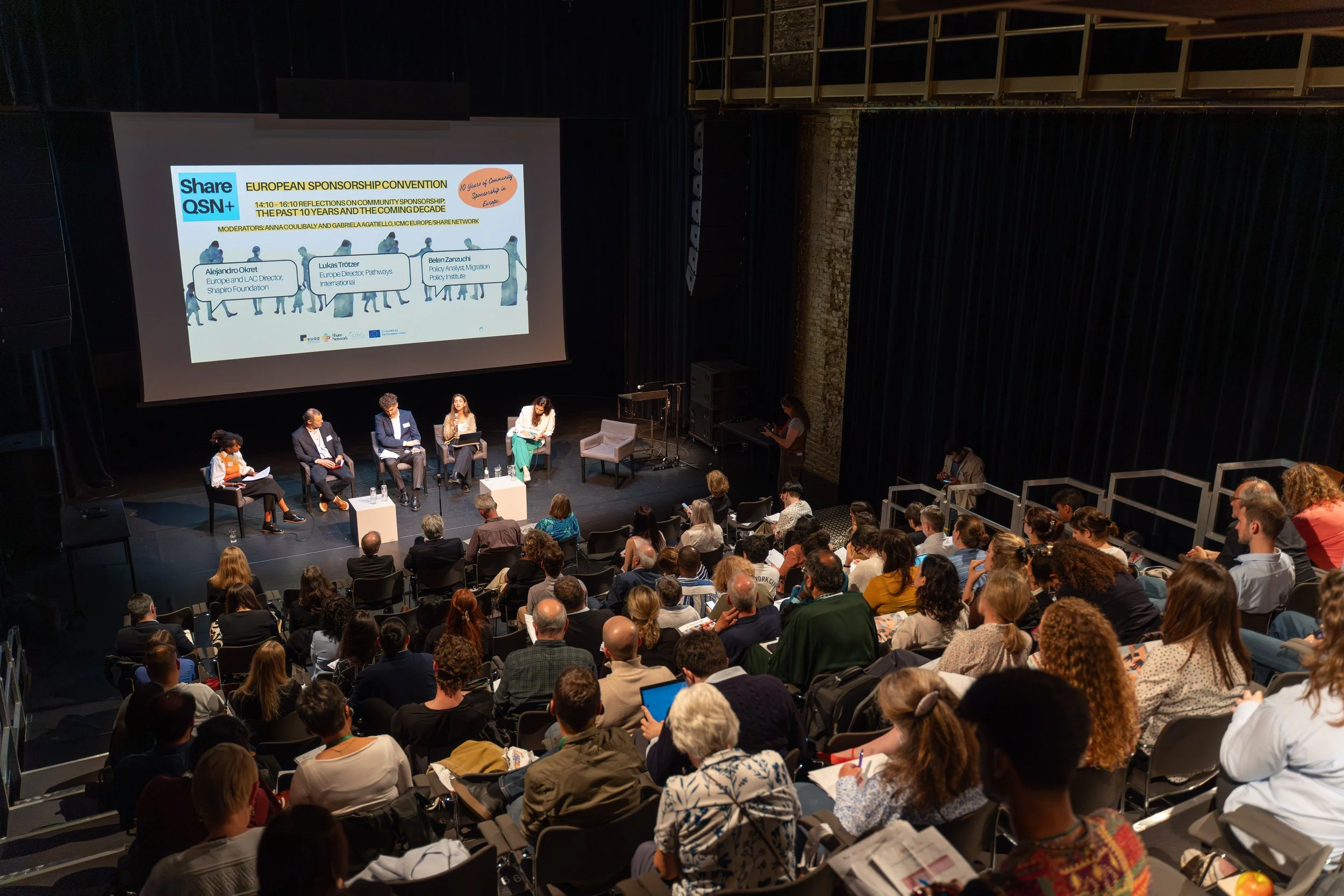
Expert panels reflected on the last decade of community sponsorship
The core afternoon panel, “Reflections on Community Sponsorship: The Past 10 Years and the Coming Decade”, brought together EU officials, think‑tank analysts, funders and practitioners to discuss how to move from fragmented pilots to a coherent European ecosystem. They explored sponsorship’s dual role: as a complementary pathway that can increase the number of protection places, and as a vehicle for active citizenship and social cohesion at local level.
Participants consistently stressed the need for:
Additionality – ensuring sponsorship adds to, rather than replaces, government‑led resettlement and humanitarian admission.
Stable public and philanthropic funding for national support organisations, local authorities and refugee‑led groups that make sponsorship work in practice.
Closer alignment with EU frameworks, including the Recommendation on Safe and Legal Pathways, the Union Resettlement and Humanitarian Admission Plan, and the EUAA guidelines.
Breakout sessions: evidence, citizenship, narratives and regions
Four breakout sessions allowed participants to dive deeper into priority themes.
Assessing impact and strengthening the evidence base – Led by EUAA, this session examined integration outcomes, comparative practices, and the long-term added value of community sponsorship across the EU.
The next 10 years of sponsorship – Facilitated by Caritas International, Irish Refugee Council and Nasc, this discussion focused on the civic dimension of sponsorship: active citizenship, community resilience, adaptation to new displacement contexts and the topic of gender in programme design.
From personal experience to collective change – French and Italian humanitarian corridor actors explored how individual encounters between sponsors and refugees can shift narratives, strengthen local democracy and drive policy change at the national level.
Alliances that integrate: regions, public sector and third sector – Regional governments from the Basque Country and Navarra, together with civil‑society partners, shared how multi‑level governance can make sponsorship viable beyond major cities and embed it in regional integration strategies.
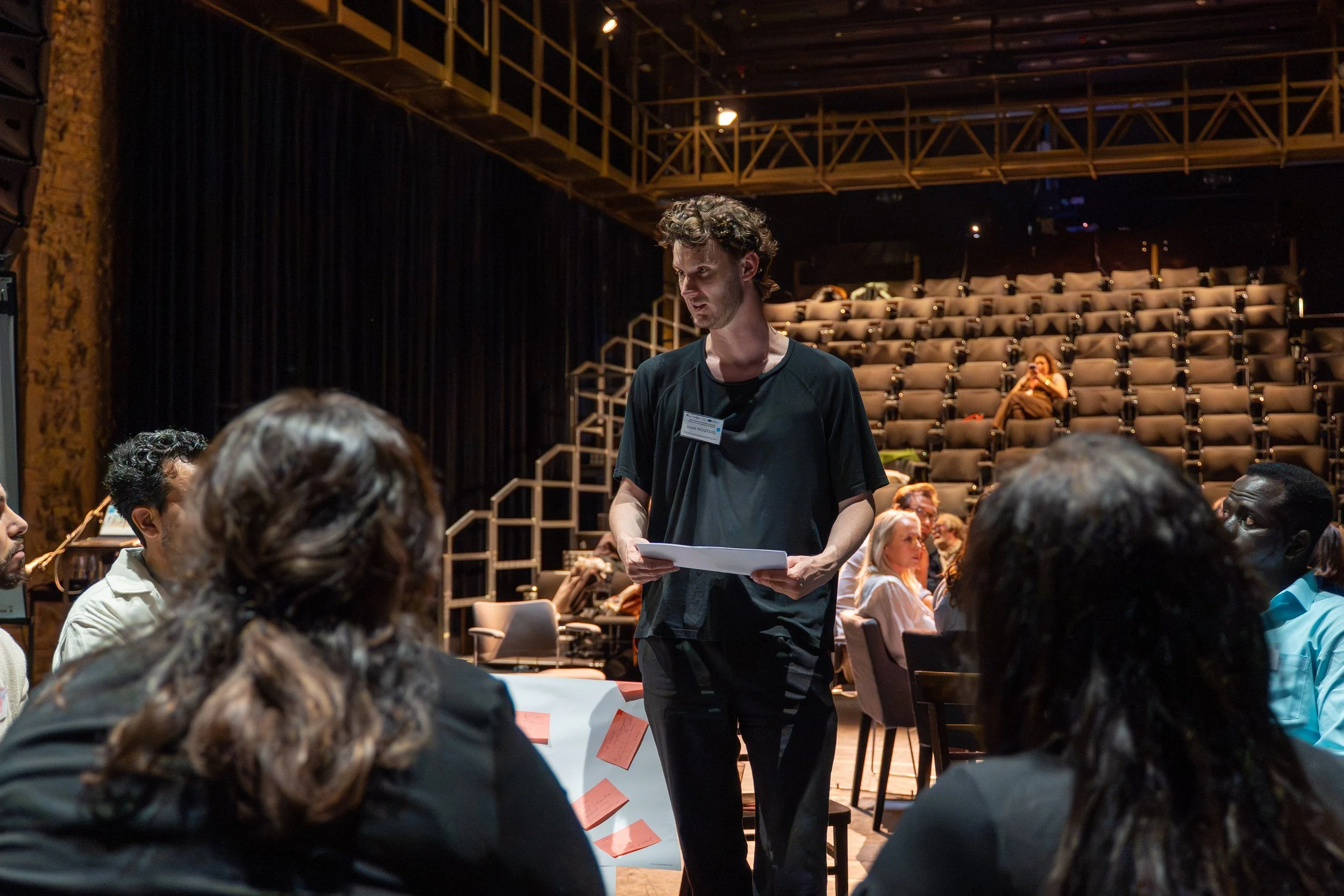
Participants discussed a variety of topics in breakout groups
Together, these conversations underlined that the next phase of sponsorship in Europe will depend not only on national policy, but also on regional leadership, evidence‑informed design and sustained investment in civil‑society capacity.
Lived experience at the centre
A dedicated plenary on “Spotlighting Lived Experience in Community Sponsorship” ensured that refugees and former newcomers were not only the subject of the day, but its protagonists. Speakers who arrived in Europe through resettlement, humanitarian corridors and university pathways shared how sponsorship had shaped their journeys: from navigating health systems and education to building professional careers and becoming advocates in their own right.
Their interventions illustrated in concrete terms why meaningful refugee participation – a commitment ICMC Europe has formalised through the global pledge to amplify refugee voices – must be hard‑wired into programme governance, training and evaluation. Rather than “beneficiaries”, sponsored refugees spoke as experts in protection and integration, co‑constructing the future of sponsorship in Europe.
Arts, stories and community
Throughout the day, participants were invited to engage with an exhibition, “Welcoming refugees in the EU: Light and Shadow” curated by Efat Abulfazil and Maninelkaos, and a live collaborative mural by the artist Kawa, both of which captured sponsorship through images and symbolism rather than only statistics.
The exhibition and mural also reflected one of the Convention’s core messages: that community sponsorship is not only a policy instrument, but a lived practice of solidarity that reshapes neighbourhoods, parishes, campuses, workplaces and lives.
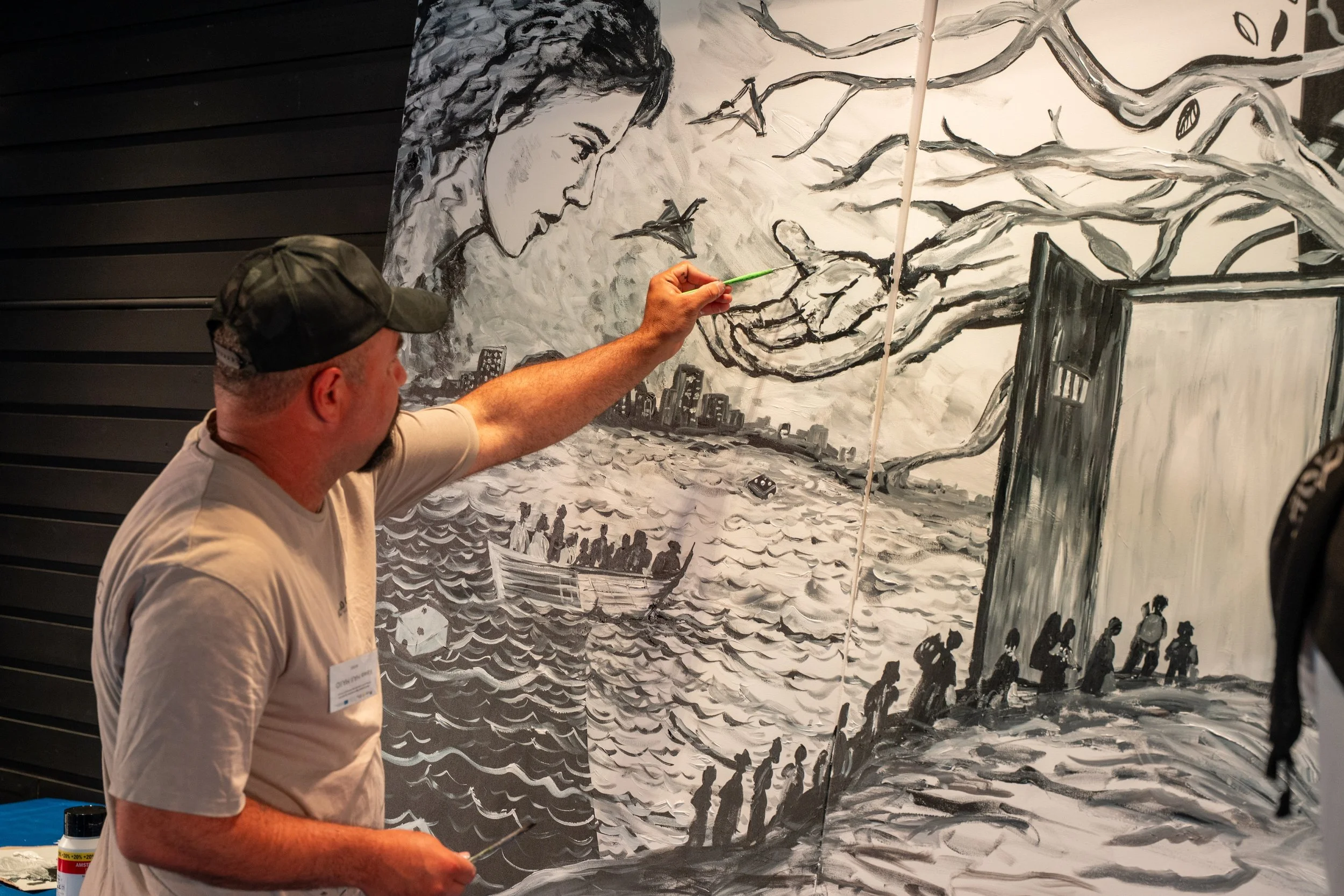
Artist Kawa and the live mural during the Convention © Caritas International Belgium