

A story of resilience, education, and the freedom to belong
28 April 2026
Courtesy of the interviewee
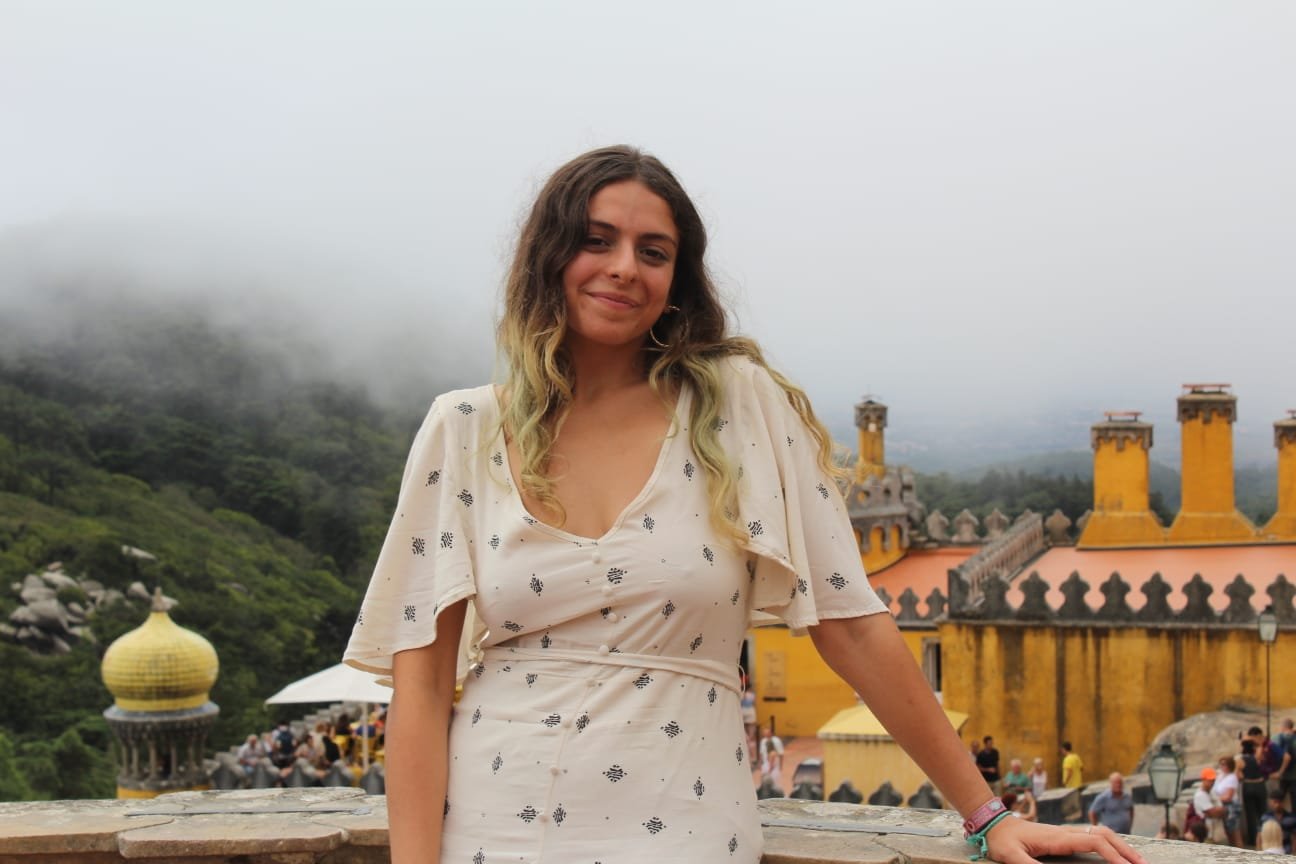
When Genwa Hassan arrived in Portugal in May 2018, she was 17 years old, traveling alone, and heading to a city she had never chosen. "Portugal chose me," she says with a quiet laugh. "I didn't choose Portugal."
Eight years later, Genwa — known as Gigi to friends and professors alike — is completing not one but two postgraduate degrees in Lisbon, navigating the world of geopolitics she once only read about from afar. Her story is one of displacement and determination, of family separated by borders and oceans, and of the profound difference that a well-designed education pathway can make in a young person's life. It is also the story of what is possible when the system works.
A High Schooler Who Crossed a War Zone for a Classroom
Genwa left Syria as a teenager at the height of ongoing conflict. Through Jusoor, an organization whose name means bridges in Arabic, she was connected to a high school in Braga, in northern Portugal, that was willing to offer her a scholarship. She also received support through what was then called the Global Platform for Syrian Students (GPSS), a program that would later evolve into Nexus 3.0, a university pathway program for students in emergency situations.
Her high school diploma came from a British A-Level program, taught in English, at a small international school far from home. She arrived in May and spent the entire summer reading her Portuguese classmates' history textbooks, catching up on a curriculum that was entirely different from Syria's. She had come from the sciences track and was now entering humanities. She was set back one academic year. She learned a new language from scratch.
"I spent that whole summer reading the notes of my classmates, just to catch up. The Maths curriculum, the history curriculum — everything was different."
But Genwa adapted. She had no other option… and she had support.
The People Who Made the Path
Through GPSS's intensive summer language programs, Genwa reached B2 level in Portuguese before her first university year began. She credits two things for that: the structured courses, and the fact that she was in Braga, a smaller city where English simply wasn't enough to make friends.
"In Braga, you had to speak Portuguese if you wanted any social life. That was actually a gift."
GPSS provided more than language classes. Every month, a stipend arrived, one that was adjusted for inflation after COVID. Housing was covered throughout her studies. And whenever bureaucracy threatened to overwhelm her (a bank account to open, a residence permit to renew, a deadline at risk) Helena, her GPSS/Nexus 3.0 coordinator, was there. Sometimes she made the trip from Lisbon to Braga just to sit with Genwa in person.
"Helena was almost like a substitute family for me. I arrived at 17. I really needed that."
A Clear Academic Direction
Genwa had always been ambitious about university. She applied to Harvard, Princeton, Stanford, and NYU. She even considered MIT, as her brother had studied there, and her ambitions were set on the US or London when she first applied from Syria. But financial aid, she discovered, was far harder to secure than she had imagined. When those doors didn't open, she looked again at what Portugal could offer, and found a course that was exactly right.
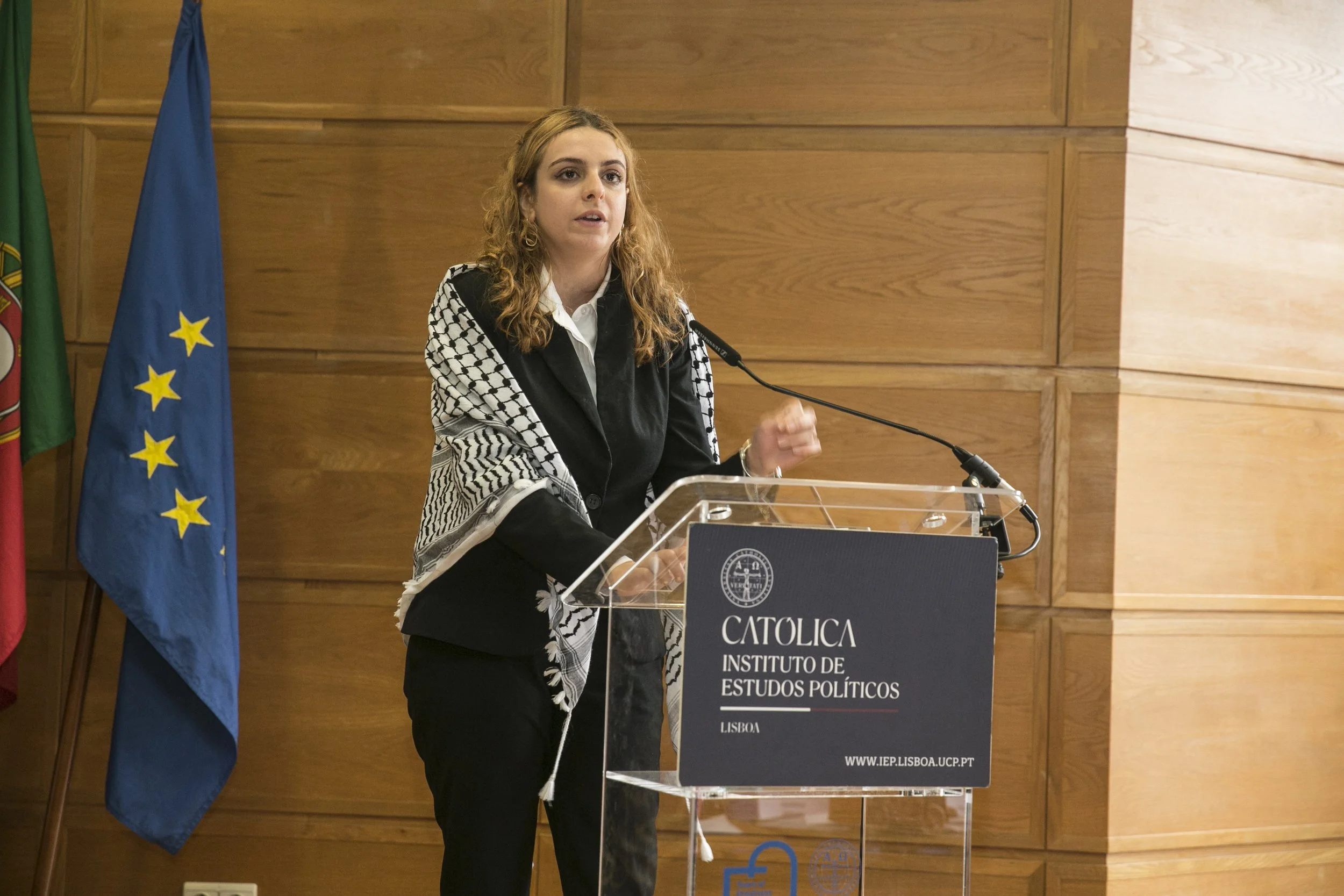
Political Science and International Relations at the Catholic University of Portugal in Lisbon. It was the only place in the country offering exactly what she wanted. She moved south, started over, and graduated in 2023.
Courtesy of the interviewee
Then she enrolled in a second postgraduate programme. And then a third.
"I applied to the geo-economics programme at the University of Lisbon, but I wasn't sure if they'd have enough students to open it. So I also signed up for the Globalization, Diplomacy and Security programme at Nova University. By the time they confirmed geo-economics, I was already registered and paid for the other one. I decided to keep both, I ended up loving them both."
The Specific Challenges for Women
When asked whether female refugee students face challenges distinct from their male peers, Genwa is honest about the limits of her own experience — but she does not stop there. She points to a concrete structural issue she witnessed through the programme:
"In my case, I didn't struggle that much, but I know that we've had some Afghan girls coming, for example, and there is a housing crisis in Lisbon. So then you need to put them in a student residence, and there's not enough exclusively female housing, so they end up being in a housing that is mixed with males. And this is culturally difficult to accept for them, at least when they first arrive."
She notes that Nexus has worked to address this over time:
"I think now they've managed more spots in a female-only residence, but this was definitely something."
What Belonging Feels Like
When asked what belonging means to her, Genwa doesn't hesitate.
"The freedom to be yourself without feeling judged."
She has built that freedom, carefully and stubbornly, in two Portuguese cities. The friends she has made in Lisbon feel like family now. She knows her professors by name — and they know hers. Years after graduating, she can still email them to ask about a conference she missed or a registration fee she can't afford, and they respond.
"That closeness, that they know me, that they want to support me, that's what home feels like to me."
Three Pillars for the Future
Genwa's goals are as ambitious as her academic record. She sees her future built around three pillars: peacebuilding and reconstruction in Syria, education opportunities for migrant students, and integration support in Portugal. She has already worked with Nexus 3.0 after her bachelor's graduation, and she understands the system well enough to want to help others navigate it.
To other refugee and migrant students who are hesitating, she has a message as direct as her personality:
"Go for it. Don't expect it to be completely smooth or easy, but it is really, truly worth it in the end."
Genwa was interviewed in April 2026 as part of the HERCoN project's series of student voices.