

Meaningful Refugee Participation: New Research and Toolkit for Community Sponsorship in Europe
28 April 2026
Meaningful refugee participation is more than just listening; it is about shifting power so that those with lived experience help design the programmes that shape their lives. To turn this commitment into practice, Share Network has launched new research and a hands-on toolkit that provide a clear roadmap for embedding refugee influence into every stage of community sponsorship, humanitarian corridors, and education pathways across Europe.
The report, Refugee Participation in Community Sponsorship Programmes, examines how refugees are involved in community sponsorship, humanitarian corridors, and education pathways across Europe, and what it takes for participation to become truly meaningful rather than purely consultative.
The research shows that refugee participation is growing, but still uneven. Across the seven countries studied (Belgium, France, Germany, Italy, Ireland, Spain, and the United Kingdom), refugees are increasingly involved as advisors, peer mentors, ambassadors, and staff members. Yet in many programmes, their influence remains limited when it comes to governance, strategic decision-making, and evaluation.
One of the report’s key findings is that meaningful participation works best when it is built into programme design from the start. Too often, refugee input is gathered after key decisions have already been made, which reduces its impact. The report highlights a clear shift toward more structured participation models, including co-design, shared decision-making, and formal roles for people with lived experience.
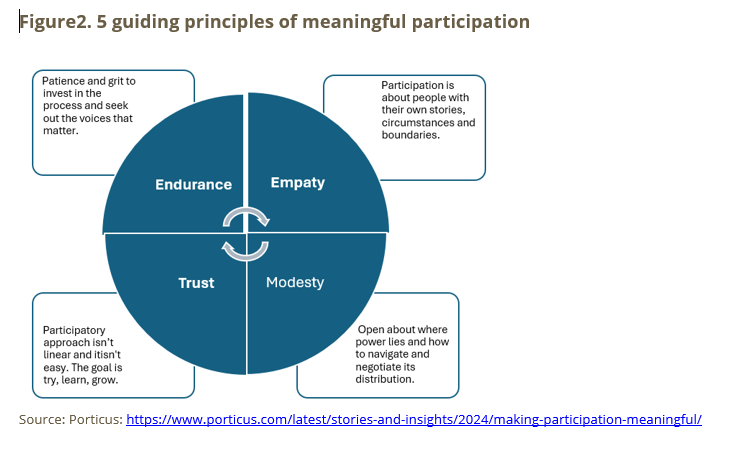
The research also makes clear that participation does not happen in a vacuum. Language barriers, legal uncertainty, funding constraints, and institutional culture all affect whether refugees can participate, and how far that participation can go. Housing insecurity and uneven access to information also shape the conditions for involvement, showing that meaningful participation depends not only on willingness, but on the broader environment in which sponsorship takes place.
The accompanying toolkit translates these findings into practice. It brings together practical tools, reports, videos, and reflective resources for practitioners, policymakers, civil society actors, and community groups working on community sponsorship, humanitarian corridors, and education pathways. Drawing on insights from refugees, sponsors, and national-level actors in Belgium, France, Italy, Ireland, Spain, and the United Kingdom, the toolkit is designed to help organisations embed refugee participation more consistently and confidently in their work.
Together, the research and toolkit offer a timely contribution to the growing conversation on refugee leadership, co-creation, and more accountable programme design. They show that when lived experience is valued not just as testimony, but as expertise, sponsorship programmes become more inclusive, more responsive, and ultimately more effective.
Explore the full research and toolkit to discover practical ideas, country examples, and recommendations for strengthening refugee participation across Europe.