

25 August 2026
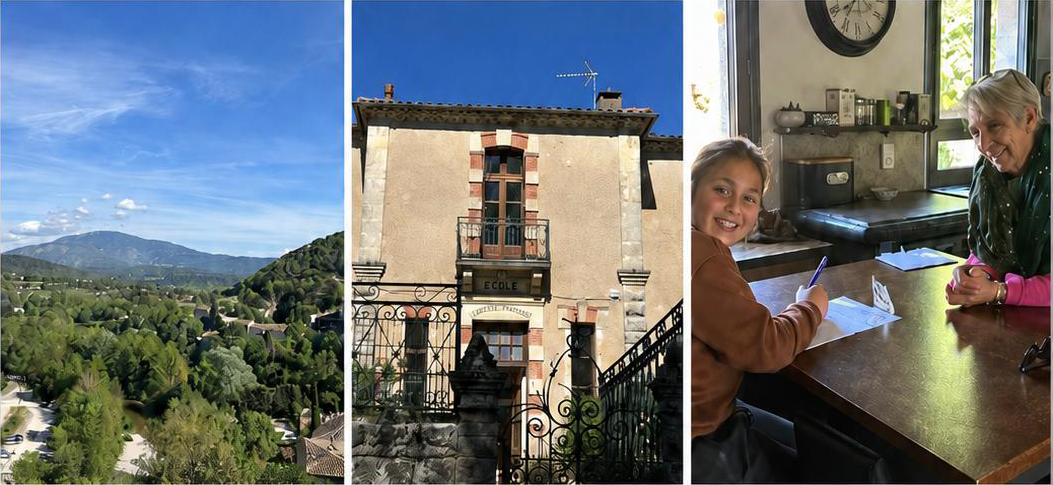
Since 2017 the Fédération de l'Entraide Protestante (FEP) has brought close to five hundred refugees from Lebanon to France through humanitarian corridors. Families are selected on protection needs before departure, travel on visas, and are received by local volunteer groups that house and accompany them. The programme is markedly rural: about three quarters of those admitted were settled in rural areas, and around a quarter in places classified as very rural.
A new study asks what happens next. Refugee Integration and Rural Communities in France — Long-term trajectories following reception through humanitarian corridors, written by Petra Hueck, follows 197 of these people in 43 reception groups across the two most rural of the FEP's five regional hubs: the Mediterranean arc and Rhône-Alpes-Auvergne-Bourgogne. It draws on 31 interviews with families, volunteer collectives and other interlocutors, nine detailed case studies and the programme's own records. Its vantage point is unusual, almost three quarters of the people followed have been in France for more than three years and 80 of them for more than six, so the study can look further down the trajectory than most work on sponsorship.
Families move within their territory, and moving on is not failure
Families did not, on the whole, stay in the commune that received them, and they did not disappear into the cities. The dominant movement is short: from the deep-rural village to the nearby service centre or provincial town, following work, training and services. It is explained by what the first commune could not supply (distance from qualified work, from secondary schooling, from specialised care; housing that ran out with the owner's circumstances or the family's growth) rather than by any rejection of rural life. Where the reception commune lay within reach of a service centre, families moved a few kilometres and stayed in the territory. Where it did not, they left it altogether. What separates rural places is access, not the label.
Volunteer time is what produces the results
The study's central explanatory finding is that volunteer hours are the input everything else depends on. Volunteers teach French before state provision opens and beyond the hours it funds; they find housing no allocation system would have produced; they drive to appointments where there is no transport; they sit with children over homework where the school has no support hours. These outcomes exist because people gave the hours, and public provision as it currently reaches these territories does not generate them. The corollary is equally plain: where a collective ages, thins or withdraws, nothing replaces it. Groups that have received several families receive again, the strongest indicator a sponsorship programme has, but repeat reception cannot be treated as self-sustaining.
Where the trajectories stand today
Schooling is the strongest and most durable result: children entered school within days of arrival, caught up systematically, and are now taking distinctions in the final secondary examination and moving into higher and professional education. Housing shows the clearest structural result: accompanied housing, including rental intermediation and the sliding lease, accounted for 47 per cent of cases in which FEP recorded a situation at the end of the roughly eighteen-month accompaniment, and commune-owned housing proved the most replicable rural channel. Employment is established but concentrated in the occupations small labour markets actually supply. Language is the weakest result: around a third of adults left the programme without measured progress beyond beginner level, and this constrains everything else. Mental health is where rural reception most clearly meets its limitsvolunteers supporting people living with trauma, in roles for which they are not trained.
Six priorities for rural reception
Prepare both ends before departure — and adopt a written matching policy built on what a place actually offers.
Change the language sequence — intensive learning in the first two years, then French tied to an occupation and to participation in local life.
Make the driving licence a budgeted priority from the start — in rural France it conditions work, health access and enterprise.
Move housing to durable tenure earlier — through standing partnerships with operators and communes rather than case by case.
Invest in the secondary-school years — orientation decisions arrive fast, and an informed adult in the room changes them.
Give participation standing — families co-designing their own trajectories, adolescents included, with peer mentoring by those who arrived earlier and pre-departure orientation delivered by people who have made the journey.
What is in the report
Nine case studies (seven family trajectories and two volunteer collectives) carry the analysis; twenty-three recommendations are grouped in six areas, each carrying the conclusion it rests on and an urgency rating; and a one-page monitoring tool sets out nine priority actions, phase by phase, for civil society organisations to run as an annual review.
The context makes this urgent. Resettlement places worldwide are shrinking, reception budgets are being cut and the public debate has hardened, while 111 people are arriving through the corridors in 2026–2027, including in rural areas.
This research, written by Petra Hueck (July 2026), was commissioned by ICMC Europe/Share Network for the QSN+ programme. Co-funded by the European Union.
Views and opinions expressed are those of the author only and do not necessarily reflect those of the European Union or the granting authority. Neither the European Union nor the granting authority can be held responsible for them.