

16 July 2026
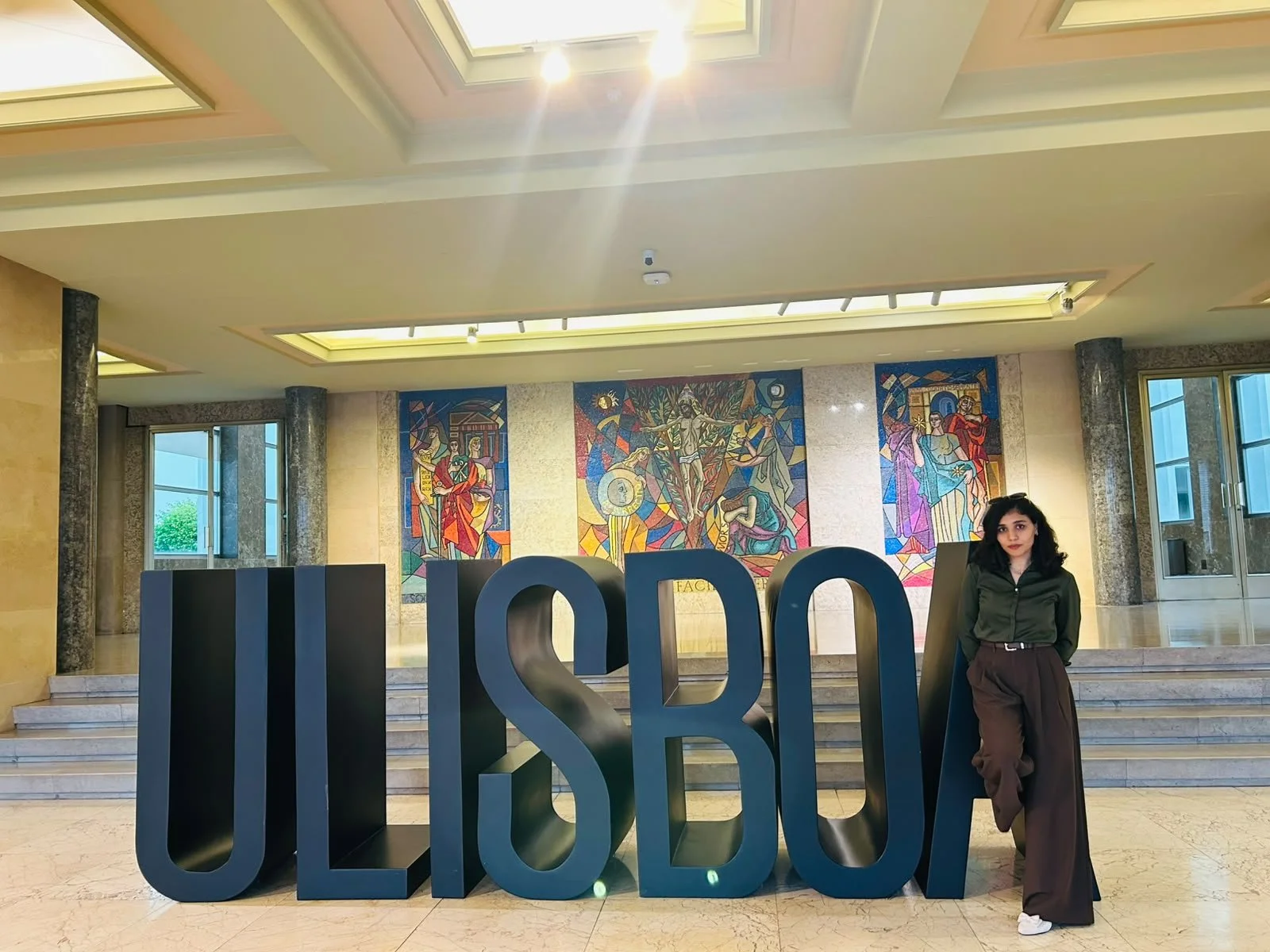
The first door closed on an ordinary day in Herat.
One week, Yasaman Mohammadi was a first-year Economics student at Herat University, planning her timetable and dreaming about where a degree might take her. The next, the Taliban had banned girls and women from education, and the campus where she had walked with books under her arm suddenly belonged to someone else's future.
In her own words, everything changed. She could no longer continue her studies in her own country, even though education had always been one of the most important parts of her life.
In the months that followed, her world shrank and expanded at the same time. It shrank because the physical spaces where she had once studied were now off-limits. It expanded because she began to spend more and more time searching online for other ways to continue her education: opportunities that could help her study in a safe place and build a future again.
The first of those doors opened in Bangladesh. Before Portugal, Yasaman was admitted to the Asian University for Women (AUW) in Bangladesh, where she completed the Pre-Undergraduate Program — a first step out of the closed classrooms of Herat, and proof that her education could continue beyond Afghanistan's borders.
Even so, she kept searching for a place where she could pursue a full degree and build a long-term future. The next door appeared in the form of a friend's message.
A friend, already part of the Nexus 3.0 programme, told her about an education pathway that sounded almost impossible from where Yasaman was sitting: a scholarship, safety, and the chance to study again in Europe. The description read like a counter-narrative to the ban: instead of closing classrooms to girls, Nexus 3.0 was actively looking for them, asking them to bring their interrupted dreams.
Yasaman gathered transcripts, filled in forms, and told her story through the application process. When the acceptance message finally arrived, it was not just an email; it was a collision of relief and emotion.

"I was extremely happy and emotional," she explains. "It felt like all my efforts, hopes, and patience had finally paid off." At that moment, it felt as if a door had opened again: a chance to continue her dreams, to study, and to rebuild her future despite everything that had happened.
That new door led to the north of Portugal.
Today, Yasaman is a second-year student of Informatics Engineering at the Polytechnic University of Bragança (UPB, formerly the Instituto Politécnico de Bragança), a small city where the streets are steep and the course she has chosen is as demanding as it is future-oriented. Before coming to Portugal, she was studying Economics in Afghanistan, so moving into Informatics Engineering was a big change for her. From the beginning, she knew it would be challenging, but she wanted to study something practical, connected to real opportunities and oriented towards the future.
Her days quickly filled with lines of code, lab sessions, group projects and exams that arrived with a different rhythm than in Afghanistan. The technical content was difficult, but so was the context: a new country, a new education system, a new language, and a completely new academic field, all at once. Technical subjects, programming, assignments and exams could be stressful, especially while she was still building her foundation.
Yet, somewhere between debugging and dictionaries, something shifted. "As I continued in this major, I started to realise that I am genuinely interested in it," she says. She is learning a lot and, even though it is not easy, she enjoys the process. This made her feel that maybe this field is really the right path for her, and that she can become successful in it if she keeps working hard.
The clearest proof came with a project called NeoLife AI.
During the first year of her Bachelor's degree, and despite arriving from an Economics background with no previous experience in Computer Engineering, Yasaman co-founded a startup that reached well beyond the classroom: NeoLife AI. Today, as a co-founder, she is actively involved in the development of the startup, contributing to its hardware development, product design, business strategy, and validation.
The recognition followed quickly. NeoLife AI won first place at the Innovation Without Borders competition hosted at UPB on 20 April 2026, and first place in the 22nd edition of the Poliempreende Regional Ideas Competition, promoted by the Polytechnic University of Bragança (UPB). Soon after, the team presented the project at the Hult Prize competition in Lisbon, where they received positive feedback and encouragement to keep developing the idea further (UPB news).
For Yasaman, NeoLife AI is more than a competition entry: it is where she discovered abilities she had not known she possessed. Moving from Economics to Informatics Engineering had felt daunting, yet within a year she was helping design hardware, shape a product, and pitch a business, turning the opportunity she had been given into something with the potential to help others.
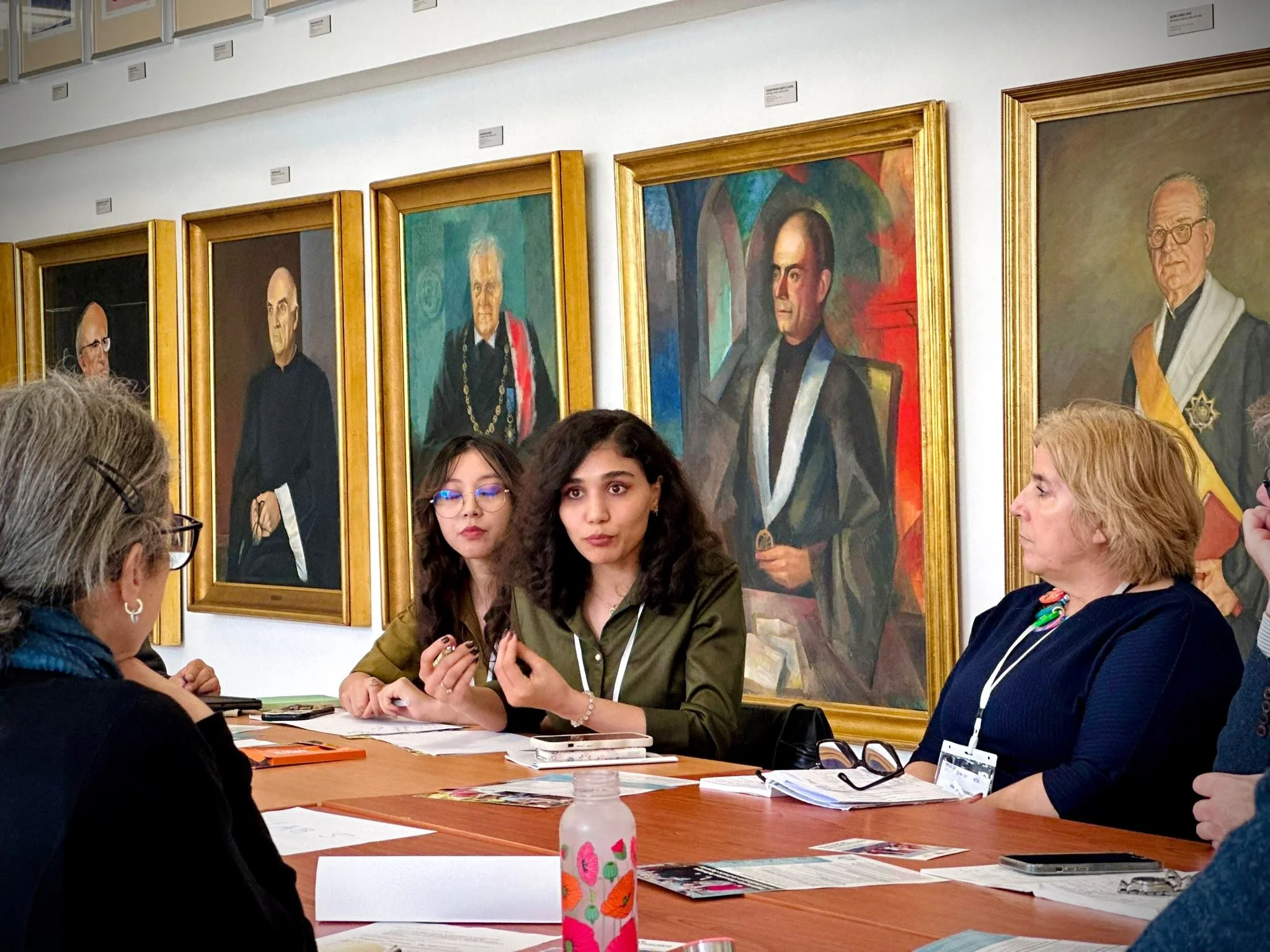
These experiences were very meaningful for her because they showed that their work, ideas, and teamwork had real value. They also motivated her to take her studies and her future in technology even more seriously.
But behind every public moment on stage, there is the invisible architecture of support that made it possible.
For Yasaman, that architecture is called Nexus 3.0. The programme did not just pay fees and living costs; it also provided guidance, encouragement, and help with many practical things that are very important when you are starting a new life in a new country. This support made a big difference for her because it gave her more stability and peace of mind. When you are far from home and trying to continue your education in a new environment, even small things can feel heavy, she explains, and having people who guide you, listen to you, and support you makes the journey much easier. Because of Nexus 3.0, she was able to focus more on her studies and feel less alone in the process.
She is truly thankful to the whole Nexus team for everything they have done. She especially mentions dear Helena Barroco, who has always been there to help, support, encourage, and guide her. Helena's support has meant a lot to her, both practically and emotionally. Sometimes one supportive person can make a difficult path feel more possible, and for Yasaman, Helena has been one of those people. Nexus 3.0 gave her more than a scholarship: it gave her confidence, stability, and the feeling that someone believed in her future, which made a real difference in her studies and in her daily life.
This experience has changed her a lot, both as a student and as a person. As a student, she has become more serious, independent, and hardworking. She learned that if she wants to succeed in a new country and in a new field, she has to be patient with herself and keep trying, even when things are difficult. Informatics Engineering is not always easy, but it has taught her to think more logically, solve problems, and believe more in her own ability to learn. As a person, she feels stronger and more responsible than before. Leaving her country, starting again in a new place, and facing many challenges at the same time has not been simple, but this experience helped her understand that she can adapt, grow, and continue even when the path is uncertain. It also made her appreciate education even more, because she knows what it means to lose access to it and then get another chance.

Life outside of studies has also been a process of learning and adapting. When you come to a new country, everything is different at the beginning: the language, the culture, the people, and even the small daily things, and it takes time to feel comfortable. Slowly, she has started to build her own routine, meet people, make friends, and understand life in Portugal better.
For her, belonging means feeling safe, accepted, and respected, being in a place where you do not feel like a stranger all the time, and where you can be yourself without fear. She believes belonging does not happen in one day; it grows slowly through people, experiences, and small moments that make you feel connected. She is still building that feeling, but she says that Portugal has given her a sense of safety and possibility. Her university environment, her classmates, and the people who supported her through Nexus 3.0 have helped her feel that she is not alone, and these things make a big difference when you are far from your family and trying to start again.
When she thinks about integration, Yasaman thinks about more than just living in a new country. For her, integration means having the chance to study, work, communicate, build friendships, understand the system, and feel included in society, and being supported enough to stand on your own feet. From her perspective, integration for migrant and refugee students in Portugal could become easier with more Portuguese language support, clearer guidance about documents and university processes, affordable housing, mentoring, and more spaces where international students can connect with local students. Sometimes, she says, students do not need something very big; they just need someone to explain things clearly, guide them, and make them feel welcome.
That confidence is not only for her.
After finishing her current studies, Yasaman's goal is to continue her education and pursue a master's degree in Robotics and Intelligent Systems. She is very interested in technology, artificial intelligence, and how intelligent systems can be used to solve real problems, and she wants to work on projects that are meaningful, especially those that combine technology with social impact. In the future, she also wants to give back to her community and help others, especially Afghan girls and refugee or migrant students who are trying to continue their education.
Her message to other refugee or migrant students is simple and firm: do not give up on education, even when the path becomes difficult or unclear. Sometimes life changes in ways we never expected, and we may feel that our dreams are far away, but she believes that if we keep trying, search for opportunities, and accept support when it comes, there is always a way forward. Especially for Afghan girls who lost access to education, she wants to say that what happened to them is not their fault, and it should never make them feel less capable. Being denied education does not mean they are not talented or deserving; their dreams are still valid, and their future still matters, even if they need to take a different path to continue.
Her biggest goal is to build a successful future where she can be independent, support her family, grow in the field of technology, and use her education to create something valuable for others. For her, programmes like Nexus 3.0 have a very important impact because they not only provide support; they give students hope, stability, and the chance to rebuild their future with dignity. As she puts it, Nexus 3.0 was not just an educational pathway; it was a real opportunity to continue her life, her studies, and her goals after a very difficult chapter.
In that sense, Nexus 3.0 is not the end of Yasaman's story but part of the structure that allowed it to continue. It shows how an educational pathway can become a response to closed doors, and how, even after education is taken away, another path to a brighter future can still be created.