

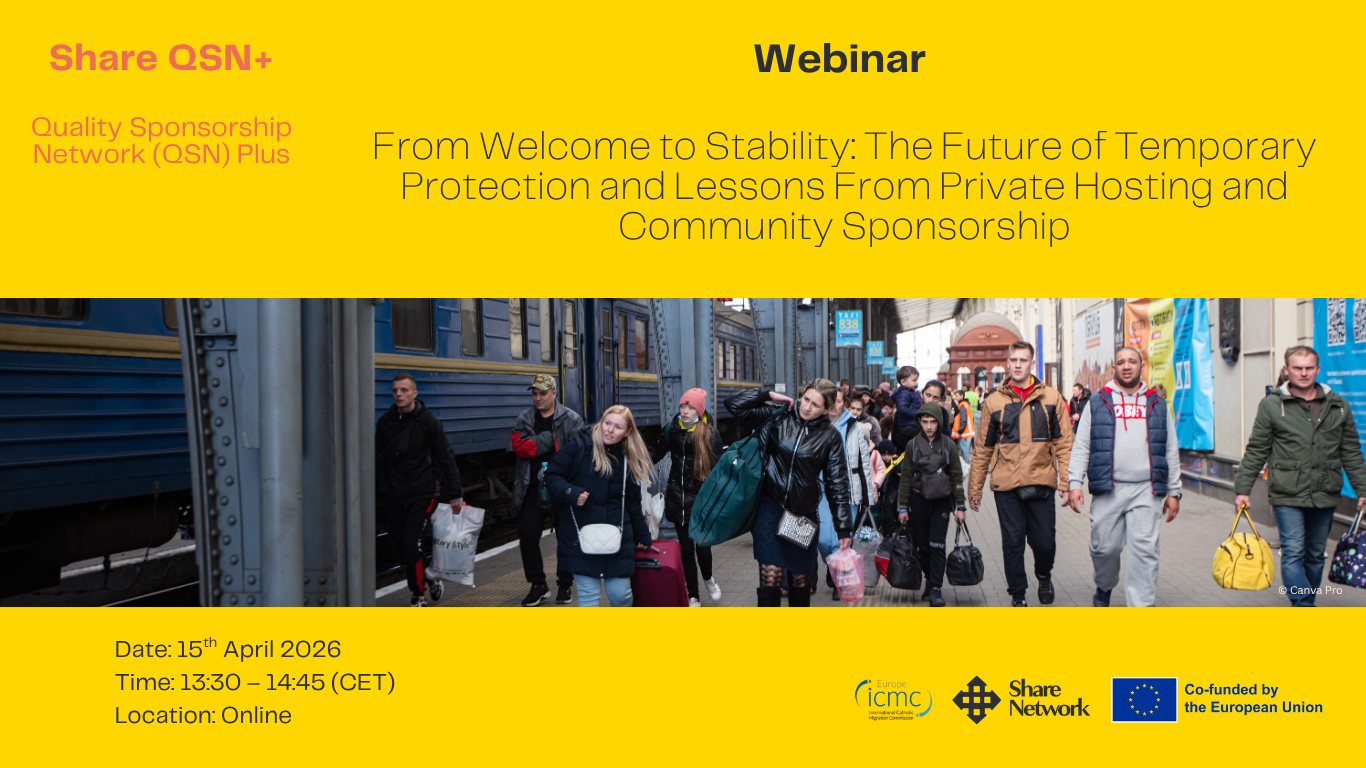
On 4 March 2022, the European Union demonstrated an unprecedented level of solidarity by activating, for the first time, the Temporary Protection Directive (Council Directive 2001/55/EC). Adopted in 2001 but never previously triggered, the Directive was designed to provide immediate and collective protection in situations of mass influx. Its activation enabled people displaced from Ukraine to benefit from temporary protection across EU Member States without having to undergo individual asylum procedures, while ensuring a harmonised set of rights, including residence, access to the labour market, housing, social welfare, medical care, and education.
Alongside this institutional response, citizens across Europe also mobilised in solidarity. Private individuals, community groups, and diaspora networks responded swiftly by opening their homes or making vacant properties available to accommodate those fleeing the war. This spontaneous mobilisation demonstrated the significant potential of community-led welcome in emergency situations and helped many displaced people find immediate shelter upon arrival.
Four years on, Temporary Protection has been extended until 4 March 2027, while many of the initial private hosting arrangements have gradually come to an end. What was designed as a short-term emergency response has, in practice, become a medium-term protection framework. As discussions increasingly turn to the future of Temporary Protection, important questions arise: what possible pathways could follow its eventual phase-out, and how might this affect the most vulnerable Ukrainians who risk losing access to essential benefits, housing and other forms of support, particularly as private hosting arrangements diminish and long-term housing solutions remain uncertain? At the same time, can lessons learned from the Safe Homes initiative and community sponsorship help inform and guide the transition period?
This webinar will explore possible scenarios for the future of Temporary Protection in the European Union, drawing on recent research and policy analysis. It will examine the implications of a future transition for vulnerable groups, with a particular focus on housing insecurity and continuity of support and access to services. Additionally, it will examine whether lessons learned from the Safe Homes initiative and community sponsorship can support the transition.
*This event is organised as part of the EU-funded Quality Sponsorship Network Plus (QSN+) project. It will be preceded by a first webinar (first part) focusing on the key components of community support for Ukrainians in Eastern Europe and Baltics. Please note that both webinars have independent registrations.