Post-graduation Transition (Mentorship, Internships, Private Sector Links, Housing)
The following resources and tools offer practical support for HEIs and civil society organizations working on post-graduation transition.
Global mentorship initiative
Global Mentorship Initiative is a US-based non-profit organization dedicated to helping young professionals around the world successfully launch their careers. GMI began as part of the Rockefeller Foundation’s Digital Jobs Initiative, which aimed to create career opportunities for young graduates in high-unemployment areas. They have a global agreement with UNHCR globally and have been part of the Global Refugee Forum.

Duo for a Job
An example of local organization outside the university that could support students in their port-graduation transition is DUO for a JOB. DUO is an NGO matching mentors with a professional expertise with mentees looking for a job or a professional experience in a specific field. Through mentorship, the participants can acquire a better knowledge of their professional field in the country of destination, having support in applying for positions or in their research for a specialized training.
Mentorship can be a critical support for students and can make the difference after their studies. HEI should explore the programs available in their region and guide students to these specialized services and projects.
Your Money In Ireland: Financial Literacy Toolkit for Migrant Families
Nasc has created Your Money in Ireland: A Toolkit for Migrant Families, a practical guide designed to help people build confidence in managing their finances. Although it was developed in response to the real-life questions of newly arrived migrant women, the information is relevant to anyone who wants to better understand banking, social welfare supports, household bills, or financial rights in Ireland. The toolkit aims to make financial systems easier to navigate, especially for those managing their own money for the first time.
The resource brings together clear explanations, step-by-step guidance, and links to trusted organisations such as Citizens Information, which provides free and confidential advice nationwide. Nasc is delighted to make this toolkit publicly available, and while it centres the experiences of migrant families, its guidance is useful for people from all backgrounds and at any stage of their financial journey.
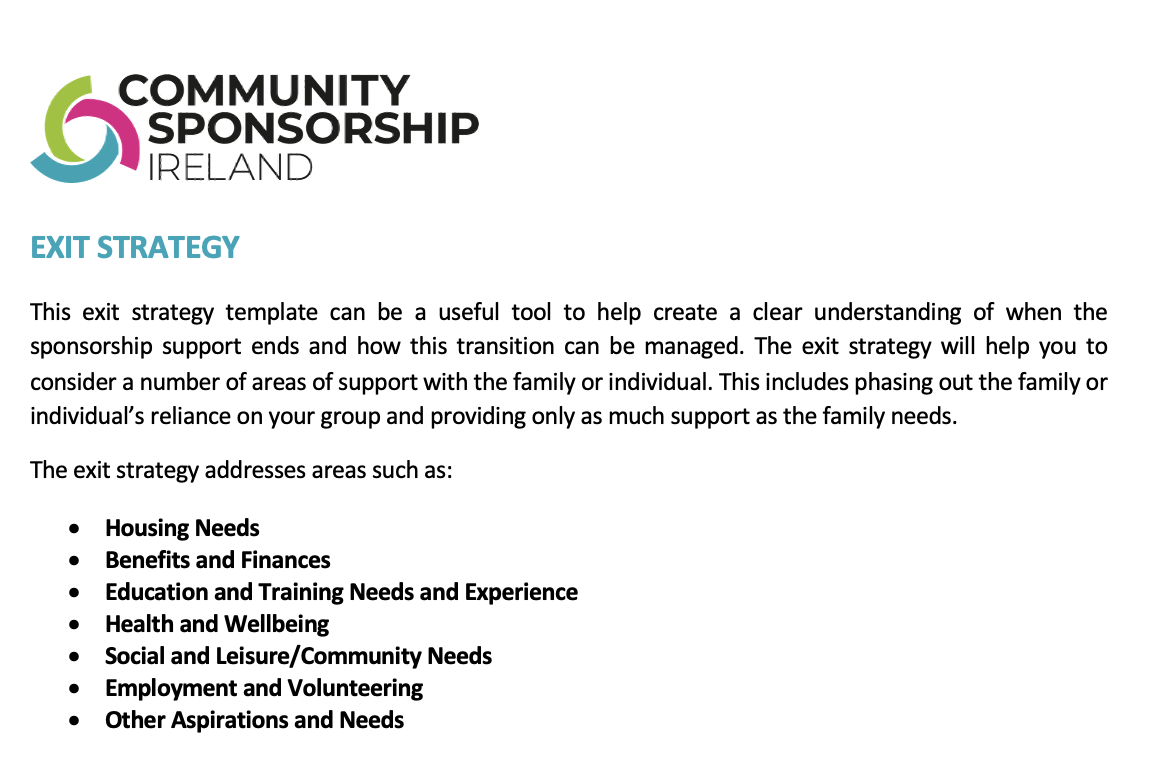
Community Sponsorship Exit Strategy
The Community Sponsorship Exit Strategy is a practical tool designed to help groups plan a smooth and supportive transition as formal sponsorship comes to an end. It guides sponsors and individuals through key areas of life, including healthcare, education, employment, housing, finances, and community participation, and helps identify what support has been completed, what still needs attention, and how to gradually reduce reliance on the sponsorship group. As the document explains, the strategy encourages sponsors to “phase out the family or individual’s reliance on your group and provide only as much support as the family needs” ensuring that independence is built at a pace that feels safe and realistic.
Although created for Community Sponsorship groups, the framework is useful for any organisation or volunteer team supporting refugees or migrants as they move toward greater independence. It prompts clear planning, shared expectations, and strong connections to long‑term services by asking groups to record who the family should contact for future support, including “relevant phone numbers, websites and addresses of these people/services.” By focusing on empowerment, clarity and continuity the exit strategy helps individuals feel confident navigating life long after the sponsorship period ends.
Preparation for the Labour Market
This workshop, developed by Caritas International Belgium as part of the Training Education Pathways Belgium (TEPB) project and co-funded by the European Union, guides international students through the practical realities of entering the Belgian labour market after graduation. It covers the regional differences in language and job opportunities across Flanders, Wallonia, and Brussels, the residence and work permit options available after finishing studies (including the orientation year, single permit, and self-employment pathways), and concrete guidance on applying for jobs — from CVs and motivation letters to managing expectations around timelines and workplace culture. The session is designed to help students prepare practically and realistically, while making clear that it does not replace individual legal advice.
This presentation is also available in Spanish, French, Italian and Dutch.
In search for Individual Housing
This workshop, developed by Caritas International Belgium and co-funded by the European Union, guides international students through the practical steps of finding individual housing in Belgium. It covers how to prepare for the search — setting realistic expectations, opening up search criteria around location, housing type, and budget — as well as where to look (and where not to look) for listings, how to present yourself during viewings, and what to do once a place is found, including signing a rental contract, arranging the site description, rental guarantee, and insurance. The session also addresses tenants' rights and obligations, and points students toward existing local support and networks throughout the process.
This presentation is also available in Spanish, French and Italian.